
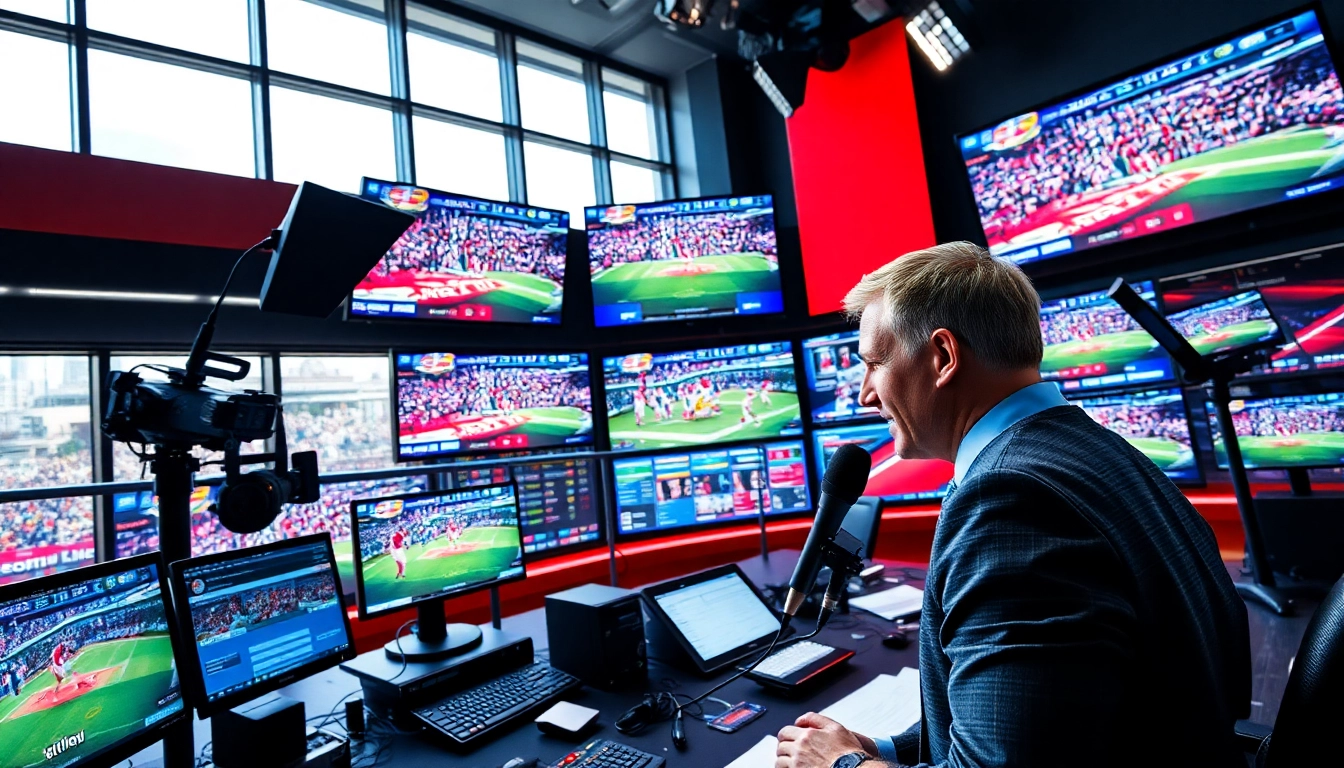
Understanding the Basics of Sports Broadcasting
Defining Sports Broadcasting
Sports broadcasting is the practice of transmitting live or recorded sports events to a diverse audience through various media channels. This encompasses television, radio, and online platforms, aiming to engage fans by delivering not just the visual aspect of the game, but also real-time commentary, analysis, and insights. The goal is to create an experience that brings fans closer to the action, regardless of their location. To further explore this dynamic field, resources on Sports Broadcasting can provide deeper insights.
Key Roles in Sports Broadcasting
The sports broadcasting industry comprises a multitude of roles, each integral to conveying the excitement of live events. Key positions include:
- Play-by-Play Announcer: They describe the action on the field, providing immediate updates and engaging viewers with energetic narration.
- Color Commentator: This role involves providing expert analysis and insights, often from a former player or coach’s perspective, enriching the viewer’s understanding of strategies and tactics.
- Producer: Producers coordinate all aspects of the broadcast, ensuring that technical elements align with the artistic vision, overseeing camera work, audio, and the overall flow of the program.
- Director: Responsible for making quick decisions on camera angles and graphics during live events, directors play a crucial role in how the story of the game is told.
- Field Reporters: These journalists provide live updates from the sideline, dissecting plays, player emotions, and any incidents from a frontline perspective.
The Evolution of Sports Broadcasting
The history of sports broadcasting is marked by significant milestones. Starting with radio broadcasts in the early 20th century, the industry witnessed a seismic shift with the introduction of television. As the medium evolved, so did broadcasting styles — transitioning from simple commentary to multi-camera setups and rich visual graphics. The advent of digital platforms and streaming services has further transformed how audiences consume sports content, allowing for personalized viewing experiences and on-demand access.
Essential Technologies for Sports Broadcasting
Equipment You Need for Quality Broadcasting
High-quality sports broadcasting relies heavily on advanced equipment. Essential tools include:
- Cameras: High-definition cameras are crucial for capturing every angle of a sports event, providing smooth footage that enhances viewer engagement.
- Microphones: Pickup devices, such as shotgun and lavalier mics, ensure that commentary and on-field sounds are crystal clear.
- Switchers: Video switchers allow producers and directors to seamlessly transition between camera feeds for dynamic storytelling.
- Graphics Systems: Graphic design tools convey real-time statistics and data, adding depth to the broadcast’s visual appeal.
- Streaming Hardware: To reach wider audiences, robust streaming technology enables live broadcasts across multiple online platforms.
Software Solutions for Streamlined Production
Software plays a pivotal role in simplifying the broadcasting process. Key types of software include:
- Editing Software: Tools like Adobe Premiere Pro and Final Cut Pro allow teams to efficiently edit and produce high-quality video packages.
- Broadcast Automation Software: Automating various broadcasting tasks improves efficiency and minimizes the risk of human error.
- Analytics Software: These tools help broadcasters gather viewership data, enabling them to tailor content to better suit audience preferences.
Innovations Shaping the Future of Sports Broadcasting
As technology evolves, so does sports broadcasting. Major innovations include:
- Virtual Reality: VR technology offers immersive viewing experiences, allowing fans to engage with games as if they were present at the venue.
- Augmented Reality: AR overlays can enhance broadcasts with real-time stats and player information.
- Integral Streaming Platforms: Services that combine traditional broadcasting with digital streaming allow for flexible viewing options and increased audience reach.
Crafting Engaging Content in Sports Broadcasting
Creating Compelling Storylines
The cornerstone of engaging sports broadcasts lies in storytelling. Successful broadcasters weave narratives around games, players, and teams to create emotional connections. Techniques include:
- Character Development: Highlight player backgrounds and personal stories to build audience empathy.
- Conflict and Resolution: Focus on rivalries and pivotal moments that underline the highs and lows of sports.
Interview Techniques for Maximum Impact
Great interviews can elevate a broadcast. Techniques include:
- Open-Ended Questions: Encourage comprehensive responses by avoiding yes-or-no questions.
- Active Listening: Demonstrate genuine interest and adapt follow-up questions based on responses.
Visual Presentation and Graphics Considerations
Visuals play a significant role in audience engagement. Key considerations include:
- Consistent Branding: Maintain a cohesive look across all graphics and video elements to reinforce brand identity.
- Data Visualization: Use clear, engaging graphics to present data simply and effectively.
Marketing Your Sports Broadcasts Effectively
Leveraging Social Media for Audience Engagement
Social media is a vital tool for promoting broadcasts. Strategies include:
- Teasers and Highlights: Post brief clips to generate excitement prior to events.
- Live Interaction: Engage with audiences through polls, Q&A sessions, or live comments during games.
Creating a Brand for Your Broadcasts
Branding is essential for differentiation in a crowded market. Steps include:
- Unique Voice: Develop a distinct tone that resonates with your target audience.
- Visual Identity: Create a recognizable logo, color scheme, and graphics style consistent across platforms.
Understanding Your Target Audience
Research your audience to tailor content effectively. Methods include:
- Surveys and Feedback: Gathering direct input from viewers can guide content decisions.
- Demographic Analysis: Understand who your audience is in terms of age, gender, and location to create tailored broadcasts.
Analyzing Performance in Sports Broadcasting
Metrics to Measure Success
Understanding performance metrics is key to improving broadcasts. Important metrics include:
- Viewership Numbers: Tracking who watches your broadcasts helps refine content strategies.
- Engagement Rate: Measure interactions across platforms to gauge audience involvement.
Feedback Mechanisms to Improve Content
Establishing effective feedback channels is essential. Techniques include:
- Post-Event Surveys: Collect viewer opinions on what worked well and what didn’t.
- Social Listening: Monitor social media for audience sentiments and insights.
Future Trends to Watch in Sports Broadcasting
Staying ahead of trends can enhance broadcasts. Key trends include:
- Increased Interactivity: Audiences will demand more engagement options through polls and commentary.
- Sustainability Efforts: Emphasis on eco-friendly broadcasting practices to align with audience values.
Frequently Asked Questions
What is sports broadcasting?
Sports broadcasting involves the transmission of live or recorded sports events through media platforms, providing commentary and analysis to engage viewers.
What technology is essential for sports broadcasting?
Key technologies include high-definition cameras, microphones, video switchers, and software for editing and data analytics.
How can I improve audience engagement in broadcasts?
Utilizing social media interactively, creating compelling narratives, and understanding viewer demographics can enhance audience engagement.
What metrics should I track for broadcast performance?
Track viewership numbers, engagement rates, audience feedback, and social media interactions to measure broadcast success.
What are the future trends in sports broadcasting?
Future trends include increased interactivity, virtual reality applications, and a focus on sustainability within broadcasting practices.